Liquid Silicone Rubber (LSR) Molding
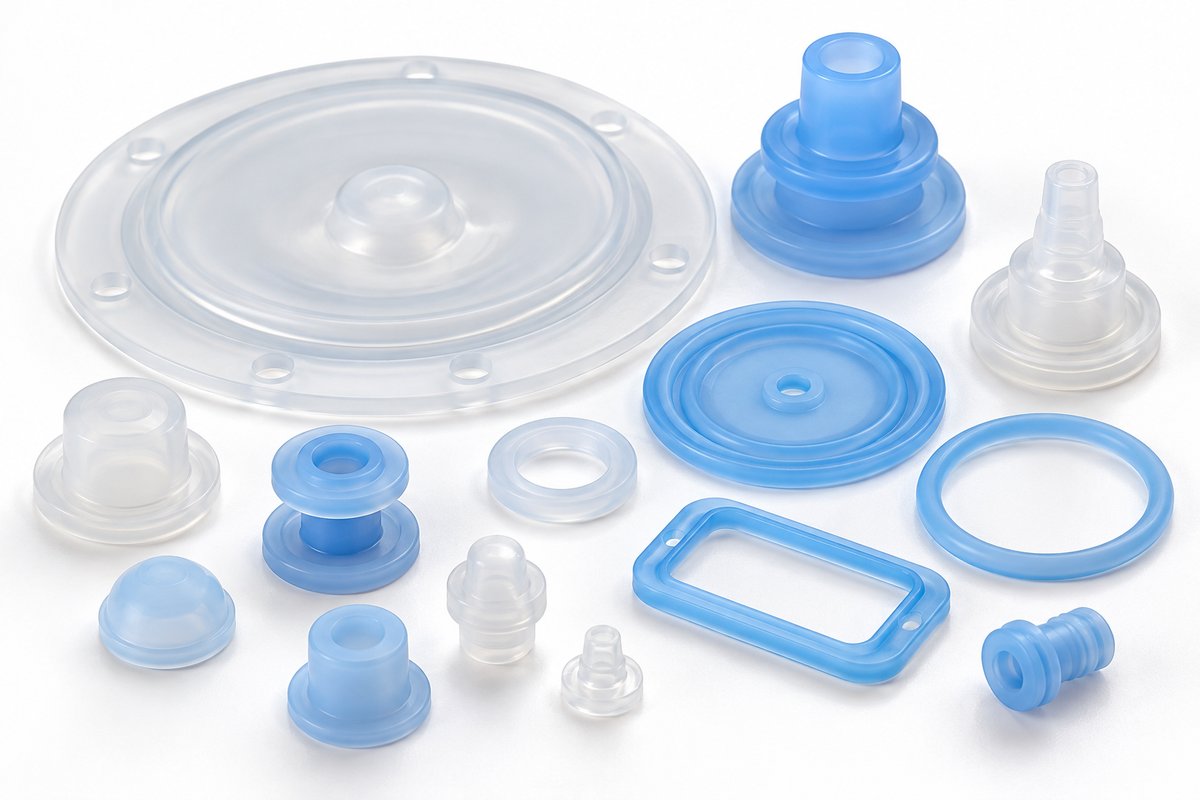
Liquid silicone rubber (LSR) molding injects a two-part, platinum-cured liquid silicone into a heated mold. Because the material is fluid, LSR fills thin walls and fine details, and well-built tools can run with very little flash. It is widely used for valves, seals, membranes, wearables and parts overmolded onto plastic.
LSR vs solid silicone (HCR)
| LSR (liquid silicone) | HCR (high-consistency, solid silicone) | |
|---|---|---|
| Form | Two-part liquid, mixed at the machine | Solid gum, milled and pre-formed |
| Process | Injection molding | Compression or transfer molding |
| Tooling cost | Higher | Lower |
| Best quantity | High volume | Prototypes to medium |
| Detail and flash | Fine detail, minimal flash | More flash, more trimming |
Typical LSR parts
- Valves, diaphragms and membranes
- Seals and gaskets with thin lips
- Soft-touch and wearable components
- Parts overmolded onto plastic or metal
What to specify
- Hardness (LSR grades commonly range from very soft to around 70–80 Shore A)
- Color and translucency
- Compliance needs such as FDA food contact or biocompatibility testing — specify the exact requirement; compliance depends on the grade and the final part
- Post-cure requirements and cleanliness/packing (e.g. clean-room bagging if needed)
FAQ
Is LSR food safe?
Food-grade LSR materials exist, but food-contact compliance applies to the specific material grade and finished part under the rules of your market (e.g. FDA 21 CFR 177.2600 in the USA). Tell us the requirement and we will confirm documentation for the proposed grade.
When is LSR better than compression-molded silicone?
At higher volumes, for thin walls or fine features, and where flash must be minimal. For prototypes and low volumes, compression molding with solid silicone is usually more economical.